
Non-timber forest products: Diversification and value beyond wood
When we think of forests, we often imagine imposing trees from which wood is extracted for construction, furniture, or paper. However, forests are much more than mere providers of timber. These vast expanses of vegetation harbor an impressive variety of resources that go far beyond what we see at first glance. Non-timber forest products, those hidden treasures in the understory and treetops, represent an invaluable wealth that greatly contributes to both our economy and global biodiversity.
Today we want to discuss this and the infinite benefits of their existence.
What are non-timber forest products?
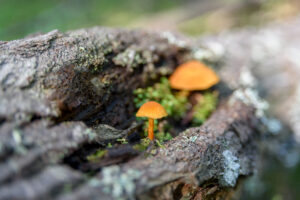
When we talk about forest products, we often think of wood, paper, or even furniture. But forests offer us much more than these timber resources.
Non-timber forest products are all those goods we obtain from forests without cutting down trees. Imagine forests as a pantry rich in diverse resources, where wood is just one part of the menu. This encompasses everything from edible fruits and nuts to medicinal plants, resins, gums, and natural fibers.
What is their importance?
These products are not only essential for our daily lives but also play vital roles in the balance of forest ecosystems.
Ecological Role: Non-timber forest products help maintain forest biodiversity. For example, medicinal plants and fruits not only provide food and medicine but also attract a variety of animal species that depend on them for survival.
Resins and gums, on the other hand, can help protect trees from diseases and pests. Additionally, by collecting these products instead of felling trees, the habitat of many species is preserved, and the ecosystem structure is maintained.
Economic Contribution: The collection and sale of products can be a significant source of income for local communities. In many parts of the world, these products are essential to the economy of rural villages.
For example, nuts and fruits can be sold in local or international markets, while resins and gums have industrial and artisanal applications. This product diversification not only creates jobs and economic opportunities but also reduces dependence on tree felling, promoting more sustainable forest management.
Comparison with timber forest products
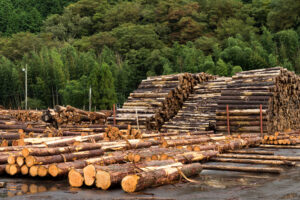
To better understand the relevance of non-timber forest products, it’s useful to compare them with timber forest products, which are probably the most familiar to most of us.
Timber products are those obtained directly from tree wood. For example, construction timber is fundamental in building homes, furniture, and other structures. This type of wood is valued for its durability and ability to be molded into a variety of shapes. Another common example is paper and cardboard, which are made from wood pulp and used in everything from books and magazines to packaging and wrapping. Wood is also used as an energy source; firewood and wood pellets, for example, are renewable options for heating and energy production.
In contrast, non-timber forest products are those resources we obtain from forests without the need to fell trees. These include a diverse range of goods, such as edible fruits, medicinal plants, resins and gums, and natural fibers. For example, fruits like chestnuts and berries, as well as plants used in traditional medicine, are collected without harming the tree itself. Resins, such as shellac, are extracted in a way that does not significantly affect the tree, and natural fibers like bamboo are harvested in a way that allows the tree or plant to continue growing.
The main difference between these two groups of products lies in the impact they have on the ecosystem. Timber products generally require tree felling, which can have a significant impact on the environment if not managed sustainably. Logging can lead to deforestation, loss of natural habitats, and disruption of ecological cycles. However, when carried out with sustainable forest management practices, these impacts can be minimized.
On the other hand, non-timber products usually have a lesser environmental impact because their collection does not involve tree destruction. For example, collecting fruits or resins can be done in a way that does not harm the tree or the surrounding ecosystem. In fact, in many cases, the exploitation of non-timber products can promote forest conservation, as it offers economic incentives to protect and maintain forests instead of felling them.
In terms of use, timber products are essential in construction, manufacturing, and energy, and have high global demand. In contrast, non-timber products have diverse applications in food, medicine, crafts, and other fields. Moreover, their added value can be significant in specialized markets, such as those for medicinal plants and aromatic resins.
Sustainability is another aspect where these products are clearly distinguished. While timber exploitation must be carefully managed to avoid overexploitation and deforestation, the collection of non-timber products can be integrated into forest management systems that promote ecosystem health and biodiversity.
Together, timber and non-timber forest products contribute in complementary ways to sustainability and economic development. While timber products are essential for our infrastructure and basic needs, non-timber products enrich our daily lives and promote forest management practices that benefit both local communities and the environment.
Properly valuing and managing both types of products is fundamental to ensuring that our forests continue to be a source of wealth and vitality for future generations.