The Natura 2000 network in Spain conserves European biodiversity
The Natura 2000 Network is an ambitious biodiversity conservation project in Europe, and Spain plays a fundamental role in this global effort. The network aims to protect habitats and species of community interest, ensuring their long-term conservation and promoting sustainable development that respects the natural richness of our environment.
What is the Natura 2000 Network and What is its Main Objective?
The Natura 2000 Network is an ecological network of biodiversity conservation areas in the European Union. Its main objective is to ensure the long-term survival of Europe’s most valuable and threatened species and habitats. This network forms the core of the EU’s biodiversity policy and is designed to maintain and restore ecosystems, ensuring that human activities are sustainable.How Many Protected Areas Does the Natura 2000 Network Include in Spain?
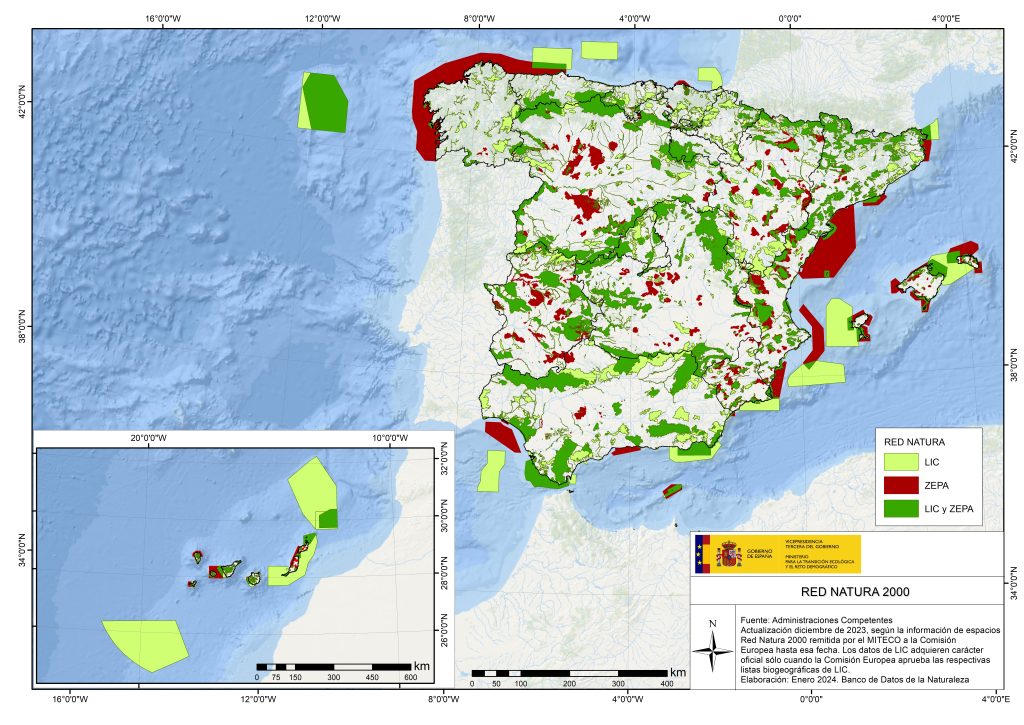
Currently, the Natura 2000 Network in Spain includes 1,468 Sites of Community Importance (SCI) and 662 Special Protection Areas for Birds (SPA). These areas cover a total area of approximately 222,000 km², of which more than 138,000 km² are terrestrial, representing 27.35% of the Spanish territory, and around 84,300 km² are marine.
How does the Natura 2000 Network contribute to biodiversity conservation in Spain?
The Natura 2000 Network significantly contributes to biodiversity conservation in Spain in various ways:
- Protects Key Habitats and Species: Ensures the conservation of 118 habitat types listed in Annex I and 263 species listed in Annex II of the Habitats Directive, as well as 125 species listed in Annex I of the Birds Directive.
- Establishes Protected Areas: Designates and manages Sites of Community Importance (SCI) and Special Protection Areas for Birds (SPA) that cover large expanses of terrestrial and marine territory.
- Promotes Sustainable Development: Encourages sustainable practices that reconcile biodiversity conservation with economic and social development.
What ecological and economic benefits does the Natura 2000 Network provide?
Ecological Benefits
- Conservation of Ecosystems: Protects and restores natural and semi-natural habitats, ensuring the survival of threatened species.
- Resilience to Climate Change: Enhances ecosystem resilience to adapt and mitigate the effects of climate change.
Economic Benefits
- Tourism and Recreation: Promotes ecotourism and recreational activities that generate income and local employment.
- Ecosystem Services: Preserves essential services such as water purification, crop pollination, and climate regulation.
- Funds and Grants: Access to European funds for conservation and sustainable development projects.
What actions are being taken to maintain and improve the Natura 2000 Network in Spain?
To maintain and improve the Natura 2000 Network in Spain, several strategic actions are being undertaken:
- Evaluation and Expansion of the Network: Incorporating new sites to adequately cover under-represented habitats and species.
- Management and Conservation: Implementing management plans for SCI and SPA to ensure their conservation and sustainable use.
- Six-Year Reports: Periodically preparing reports on the implementation of the Habitats Directive, assessing conservation status and progress made.
- Strategic Plan for Natural Heritage and Biodiversity: This plan sets key objectives, such as fully developing the Network, assessing its climate change resilience, and developing a priority action framework for EU co-financing.
- Institutional Collaboration: Promoting collaboration among the central government, autonomous communities, and other stakeholders for effective and cohesive network management.
Natura 2000 Sites in Castilla-La Mancha
These are the Natura 2000 sites in Castilla-La Mancha that have an approved management plan and have been designated as Special Conservation Areas (ZEC):